
AGENCY GROWTH CLUB
Ross Simmonds on “Create Once, Distribute Forever”
Guest Ross Simmonds
Guest Ross Simmonds
Ross Simmonds, founder of Foundation Marketing and creator of “create once, distribute forever,” argues that most marketers have the content equation backwards, obsessing over creating something new instead of maximizing the ROI on what they’ve already made.
On this episode of the Agency Growth Club, he breaks down why the algorithm isn’t the problem, the Four E framework for content that actually works, and a real, step-by-step walkthrough of turning a single podcast episode into a full content engine.
Pulled from the transcript’s real per-line timestamps, matched to where each topic starts.
Ross Simmonds opens on a principle he wishes he’d internalized earlier: people dramatically overestimate how much others actually think about their ideas, posts, and opinions. Any reaction, positive or negative, to something shared on social media is genuinely fleeting, people move on almost immediately, even when it doesn’t feel that way in the moment.
“Once in a while you might get a hater, somebody might say something negative. But guess what’s going to happen a week later? Everyone will forget.”
His conclusion isn’t cynical, it’s permission: marketers should be more willing to ship, experiment, try a meme, try something a little different, because the actual downside of a misstep is far smaller and shorter-lived than it feels while you’re deciding whether to hit publish.
Simmonds’ clearest example here is Zoom versus Google Meet and Microsoft Teams. When Zoom exploded during the pandemic, it was genuinely winning, better product, faster adoption. But Google and Microsoft had something Zoom didn’t: existing distribution built directly into products hundreds of millions of people already used daily (Workspace, Gmail, Office). Once those companies pointed their existing distribution at a comparable product, Zoom’s product advantage stopped being enough to hold the market alone.
“There’s so many companies worth multi-billions of dollars that have a very mediocre, below-average product, but because they have unlocked distribution, they are winning the market.” – Ross Simmonds
The lesson for agency owners: a startup or agency doesn’t need to be the best in its category to win, it needs to be the most visible to the right audience, and distribution advantage can outweigh product quality for a remarkably long time.
Simmonds is blunt: the algorithm doesn’t care about you, at all, and blaming it is a convenient scapegoat that lets marketers avoid looking at what’s actually within their control. His actual diagnosis when someone isn’t getting traction: a weak YouTube thumbnail, a video intro that doesn’t hook attention fast enough, or simply not actively promoting content after hitting publish.
“There’s a lot of things that are inside of your circle of control that you can focus on that leads to results, that most of us avoid because we want to find a scapegoat.”
His practical stance, echoed by a callback to a conversation Josh had with creator James Smith: if the content itself is genuinely good, it will find distribution over time, worrying obsessively about which platform or algorithm to chase is usually a distraction from fixing the content and promotion itself.
Simmonds’ point here directly challenges a common marketer instinct: the fear of repeating yourself. He points out that Nike has run “Just Do It” for over a decade, and no marketer would call that redundant. Most creators wildly overestimate how much their audience has actually absorbed a given message, because they personally hear their own content constantly, the audience does not.
“Your competitors are winning because they aren’t as precious as you about needing to always try to say something different and unique and new with their story.” – Ross Simmonds
His advice: being comfortable with repetition, as long as the underlying message is genuinely good, is a competitive advantage most marketers avoid out of unnecessary self-consciousness.
Simmonds traces the philosophy back to an early-career mistake: a self-imposed 30-day blogging challenge, one brand-new post daily, that produced minimal traffic despite the volume of new content. When he stopped creating new material and instead started resharing, reformatting, and redistributing what he’d already written (turning posts into YouTube videos and LinkedIn updates, seeding them into communities like the now-defunct GrowthHackers and Inbound.org, the modern equivalent being places like Exit Five or the Agency Growth Club community itself), engagement and inbound leads increased immediately.
“The idea that creation and content was king was kind of broken. What was actually real was the fact that you actually need to distribute your stories, and that distribution is the most important thing.” – Ross Simmonds
The core premise: create genuinely high-value content once, then distribute it consistently over months, rather than treating every distribution touchpoint as requiring something brand new.
Simmonds frames content the same way an investor treats capital: once you’ve put time or resources into creating something (a webinar, a podcast appearance, a blog post), failing to extract ongoing value from it, repurposing, repackaging, resharing, adding it to an email signature or newsletter, is a disservice to that initial investment.
He’s explicit that this doesn’t require heavy lifting: resharing a piece of existing content while walking to a taxi takes minutes, and even a modest response (his example: two likes) beats the zero return of doing nothing at all.
Actionable advice:
Simmonds recommends running two parallel tracks. Evergreen, scheduled distribution (using tools like Buffer, Hootsuite, or his own distribution.ai) should already be queued up at the start of each month, repurposing existing pillar content on a predictable cadence. Reactive content, responding to a genuinely timely industry event (his example: an SEO-relevant Google algorithm or SERP feature change), needs dedicated calendar time and a pre-built “playbook” for what happens immediately after publishing, LinkedIn, X, newsletter, Instagram Story, YouTube Short, all mapped out in advance rather than decided ad hoc.
Simmonds’ most direct critique of agency content specifically: most agencies treat their blog and social channels as a press release feed, “we just launched this service,” “we just hired this person,” “we just won this award”, content that’s valuable to the agency’s own ego but provides no real utility to the audience reading it.
“They treat their LinkedIn like a press release feed where it’s just all about me, all about me, all about me, versus how can I help my audience achieve their goals.”
His fix: shift from monologue to dialogue, content built around genuinely helping the audience achieve something, is what actually generates results, not announcements about the business itself.
Simmonds’ core, reusable framework: every piece of content worth publishing should be Entertaining, Engaging, Educational, or Empowering. Content that fits none of the four categories tends to underperform regardless of platform, timing, or promotion effort.
“Every day people are creating content that only gets likes from their parents, their aunts, their uncles, and their besties, and they can’t crack why no one else likes their content. It’s because they don’t follow the framework I call the four E.”
Actionable advice:
Simmonds’ funnel advice starts with understanding that buyer journeys differ meaningfully by deal size and buyer complexity. A small-to-medium business buying a roughly $2K/month retainer typically needs a much tighter, faster funnel than an enterprise buyer navigating procurement, legal, and multiple internal stakeholders.
The practical approach: map your existing content assets against your actual buyer’s typical journey, and look specifically for gaps. His enterprise example: missing security documentation is a common gap that needs to be filled with dedicated content and messaging, while a small-business funnel might just need a tight, direct top-of-funnel-to-sales path with far fewer touchpoints.
Asked for the most efficient way to actually execute “create once, distribute forever,” Simmonds walks through his real process using this very episode as the example, without relying on his own tool, distribution.ai (built specifically to automate this).
“That’s how you run a full content engine on the back of this type of effort.”
Simmonds keeps this simple for most agencies: below roughly 100 employees, the only metrics that matter are leads, pipeline, and revenue. Branding-focused metrics, brand mentions, organic site visits, become genuinely important once an agency reaches a scale where brand trust starts influencing larger RFPs and enterprise deals, but chasing those metrics too early is a distraction from what actually moves a smaller agency forward.
Simmonds’ current read, as of this recording: LinkedIn is thriving and, in his view, unmatched specifically for agency owners right now. X is in a decent-but-not-great state, still valuable (and where he built much of his own career), but with visibly reduced engagement and a real audience hiatus. YouTube is picking up real momentum. Reddit is underused by most marketers but genuinely strong in software and tech specifically, less proven for local or small-business use cases. Instagram remains a strong fit for visually-driven service categories, real estate, interior design, and similar.
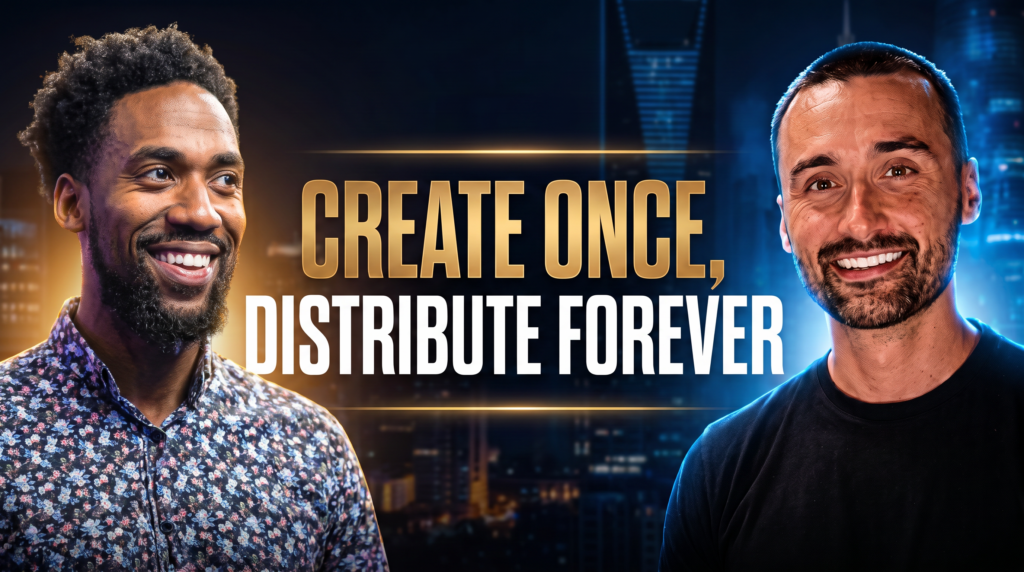
It’s Ross Simmonds’ philosophy that marketers should focus less on constantly creating brand-new content and more on maximizing the return from content they’ve already made, repurposing, resharing, and redistributing it consistently over months rather than moving on to the next new piece immediately.
Ross Simmonds recommends agencies under roughly 100 employees focus exclusively on leads, pipeline, and revenue. Brand-focused metrics like mentions and organic traffic only become a priority once the agency reaches a scale where brand trust influences larger deals.
According to Ross Simmonds, no, blaming the algorithm is a scapegoat. The real, controllable factors are usually content quality (thumbnails, hooks) and whether you actively promote content after publishing, not platform algorithm changes.
Ross Simmonds currently rates LinkedIn as the strongest platform specifically for agency owners, with YouTube gaining momentum, Reddit underused but promising in tech, and Instagram well-suited to visually-driven service categories like real estate or design.
Ross Simmonds’ real workflow: extract 5 clips, turn each into a blog post, schedule them over 2-3 weeks, pull frameworks into LinkedIn carousels, seed relevant posts into online communities, push to email, and optimize video titles for search intent rather than guest names.
Ross Simmonds’ framework says effective content should be Entertaining, Engaging, Educational, or Empowering. Content that doesn’t clearly fit at least one of the four categories tends to underperform regardless of platform or timing.


With 95% of roles filled within 25 days, our approach is built for pace and backed by a 1 year guarantee. Get access to the systems and frameworks that power elite SFH teams.