
AGENCY GROWTH CLUB
Rand Fishkin on Why Raising $30M at Moz Was a Mistake
Guest: Rand Fishkin
Guest: Rand Fishkin
Rand Fishkin believes Moz could have been a thriving, profitable $50-70M business growing steadily at 5-10% a year, if it hadn’t raised venture capital.
On this episode of the Agency Growth Club, he breaks down why a $30M funding obligation forced Moz into decisions that weren’t actually good for the business, the $50,000 market research report that inspired SparkToro, and why he now deliberately keeps his teams tiny enough to need almost no management at all.
Pulled from the transcript’s real per-line timestamps, matched to where each topic starts.
Fishkin’s clearest, most distilled takeaway from nearly 15 years at Moz: the decisions you make about funding and structural goals dictate almost everything else that follows. Incentives and culture, once set by that early structural choice, become “impossibly powerful forces to overcome,” strong enough that he’s deliberately chosen different funding structures for his later companies specifically to avoid repeating the pattern.
Fishkin lays out the math directly: if you raise $30M in venture capital, as Moz did, the implicit obligation is to return roughly $300M to investors, a 10x return. That reality forces a binary framing: grow very fast, or fail trying, both of which are considered acceptable outcomes from a venture fund’s perspective, especially given that, in Fishkin’s account, roughly 95-96% of venture-backed companies fail to return even 1x their investors’ capital.
The frustrating part, in hindsight: Moz could have been “a very successful mid-market business doing 50 to 70 million a year in revenue, growing at 5 to 10%, profitably.” That outcome simply wasn’t compatible with the structure Moz had already committed to once it raised venture capital, which pushed the company toward “a lot of foolish things to try and grow fast rather than a lot of intelligent things to optimize what it had.”
Moz’s funding path, as Fishkin describes it directly: the company started as a consulting agency (2004-2007), built internal software for its own client work, then released that software publicly in 2007 at a low price point (he cites $29 or $39/month). Growth from an audience built through blogging (what would now be called content marketing, though Fishkin notes they had no term for it at the time) attracted attention from local Seattle venture capital firms.
The actual sequence of raises: $1.1 million initially, a relatively small amount even by the standards of that era, which converted Moz into a venture-backed company with fundamentally changed incentives and structure. Growth continued for several years, then in 2012, Moz raised $18 million, a round Fishkin is candid the company didn’t actually need, it was already profitable and growing. He believes that capital slowed the business down, made it less careful, and pulled focus away from its core market toward adjacent markets Moz didn’t have the team, discipline, or experience to properly tackle. After burning through that $18M trying to make the expanded strategy work, Moz raised a further $10 million specifically to keep going.
“That money slowed us down. I think it made us less careful. I think it took our eye off the market we cared about and believed in.”
Fishkin notes his full list of Moz takeaways is extensive enough that it became the basis of his book, Lost and Founder. On SparkToro specifically, he highlights a structural challenge distinct from Moz: SparkToro reached roughly $1-1.5 million in annual recurring revenue relatively easily, but growing 2-3x beyond that has proven genuinely difficult.
His diagnosis: SparkToro operates in a field, audience research, that almost nobody has an explicit job title or mandate to do, unlike SEO, which rode the meteoric, largely accidental growth of the internet, broadband, mobile, and Google itself becoming one of the world’s dominant companies. Moz’s early growth was propelled by that external wave without the team fully realizing it at the time; SparkToro has no comparable wave to ride, so building basic awareness of the problem it solves is a much heavier lift.
Asked about SparkToro’s lead generation approach, Fishkin references his own pinned social post directly: “the best way to sell something is don’t sell anything. Earn the awareness and trust of people who are likely to buy.” SparkToro runs no paid advertising (though Fishkin doesn’t rule it out eventually); growth instead comes from organic social, conferences, events, podcast interviews, and being genuinely present in the same places SparkToro’s own target audience, digital marketers, strategists, VPs of marketing, agency owners, already pay attention to.
The approach is a direct, practiced application of SparkToro’s own product thesis: rather than chasing direct traffic or buying it, the company focuses on understanding and showing up in its audience’s actual sources of influence.
SparkToro has had more than 200,000 people sign up for its email list over time, but deliberately prunes it every six months, removing inactive subscribers via an automated “we noticed you haven’t opened our emails, click here to stay on the list or we’ll remove you” message. As a direct result of that ongoing hygiene, the active list sits closer to 50,000-55,000, a much smaller number that Fishkin credits with dramatically better deliverability and open rates, landing in primary inboxes rather than spam or promotions folders.
The deeper strategic point: SparkToro’s newsletter is deliberately built as a standalone product in its own right, focused on the problems SparkToro’s ideal customers care about broadly, not just direct promotion of the SparkToro tool itself, which is what makes it something people genuinely want to keep receiving even if they never become paying customers.
Actionable advice:
Fishkin’s clearest articulation of SparkToro’s core value proposition: it solves a similar problem to surveys or interviews (understanding audience behavior and influence sources) but through data passively collected and aggregated at scale, from clickstream sources, search results, and public profile data, rather than from what people say about themselves.
The reason this matters: people’s self-reported memory of their own behavior (what platforms they use, what podcasts they subscribe to) is often meaningfully different from their actual real-world behavior. Passive, aggregated data sidesteps that self-reporting gap entirely.
SparkToro’s origin traces directly to Fishkin’s experience advising and investing in a range of startups, where the same problem kept surfacing: founders wanted to know where their audience paid attention, but the only real option was expensive, slow market research. Fishkin and SparkToro co-founder Casey Henry looked at a real example: a report costing tens or hundreds of thousands of dollars (Fishkin cites $50,000 specifically), taking three to six months to deliver, and landing as a single static report (demographics, sources of influence, channels).
Their reaction: paying $50,000 and waiting six months for a report they considered neither comprehensive nor accurate (since it relied on surveys) was a genuinely bad deal. That direct frustration became SparkToro’s founding thesis: solve the same problem passively, across the whole web, for a much broader set of people who need the same answers.
Fishkin frames this with a paraphrased nod to Tolstoy (misattributed to Dostoevsky in the moment, but the “happy families are all alike, unhappy families are each unhappy in their own way” observation): successful startups tend to share a similar pattern, a strong product-market fit, a clear advantage over alternatives, and a go-to-market approach that plays to the founders’ actual strengths while minimizing their weaknesses.
Struggling startups, by contrast, tend to fail for genuinely different reasons each time, product problems, positioning problems, cost structure problems, channel-fit problems, market timing problems. But if there’s one recurring exception, one problem Fishkin sees disproportionately often across genuinely struggling companies, it’s co-founder conflict: leadership that fundamentally doesn’t see eye to eye on how to make decisions or invest.
“I think that kills more startups than any other one thing, co-founder conflict.”
Fishkin’s clearest, most specific “expensive lesson” example: Moz spent a long stretch trying to broaden its product from pure SEO into serving social media marketers, content marketers, PR professionals, and PPC specialists, all at once, in a single major release, rather than expanding into those markets one at a time.
“We tried to release a big update that offered all these different pro solutions to these problems at the same time. Big, big, big mistake.”
His retrospective lesson favors modern, iterative product development: small releases, tested against real audience response, ideally followed later by a more holistic redesign or repackaging effort only once a series of smaller, validated changes have already landed.
Actionable advice:
Fishkin notes a genuine frustration specific to Snackbar Studio, his indie video game company: unlike software, games can’t be iteratively released to the public the way SaaS products can. Today’s market treats any early access release as if it were the full, polished release, so private testing (rather than public early access) is really the only viable option before launch.
The team leans heavily on paid QA testers (a common video game industry practice, an agency-supplied team playing the game for a set number of hours and reporting bugs) alongside a specific signal Fishkin considers highly predictive: whether testers voluntarily go back and play the game on their own unpaid time. If they do, that’s a strong signal the game is genuinely engaging; if they don’t, more iteration is likely needed. SparkToro applies a similar signal during its own alpha testing periods, watching whether testers return to use the product again without being prompted to.
Fishkin is candid that hiring and management aren’t personal strengths, so rather than trying to force himself into a role he’s not naturally suited to, he’s built his current companies around that honest self-assessment. Both SparkToro and Snackbar Studio are deliberately kept small, staffed with genuine self-starters who need minimal oversight, his example is Snackbar’s lead engineer, who runs on a single weekly check-in call with essentially no ongoing feedback required.
His concrete, transferable advice: hire agencies and consultants for specialized functions (Fishkin’s companies use outside help for taxes, finances, UX, design, branding, and user testing) rather than building out a larger permanent team. The advantage is flexibility, spend can scale up or down quickly without the emotional difficulty of managing headcount you don’t consistently need, compared to justifying ongoing work for a full-time hire brought on for what turns out to be seasonal or project-based need.
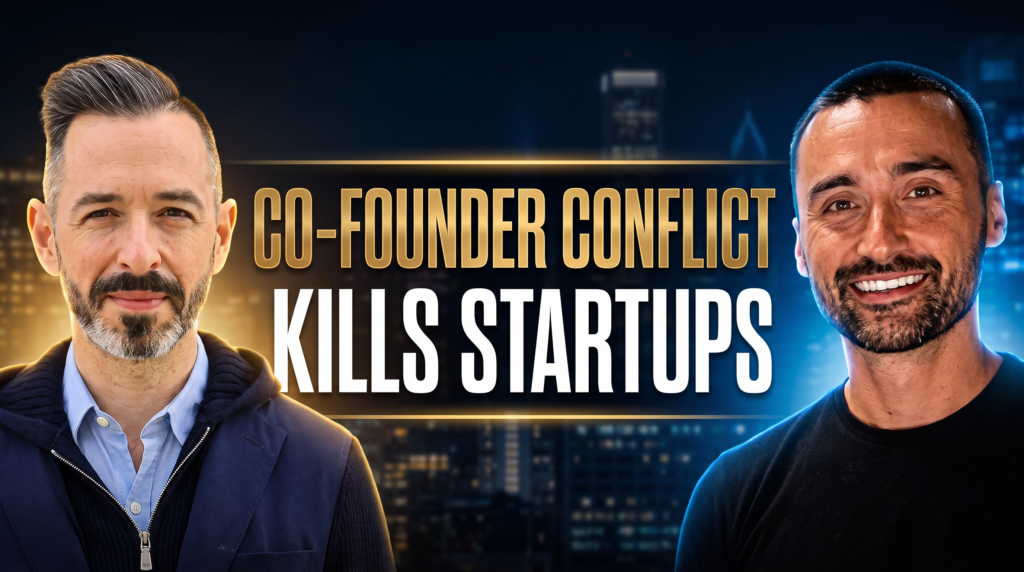
Co-founder conflict, leadership that fundamentally doesn’t see eye to eye on decisions and investment. While most struggling startups fail for different, specific reasons, Fishkin says this one pattern recurs more than any other single cause.
A “big bang” product release that tried to expand Moz from pure SEO into social media, content marketing, PR, and PPC audiences all at once in a single major update, rather than testing expansion into each adjacent market with smaller, iterative releases.
He’s candid that hiring and management aren’t personal strengths, so SparkToro and Snackbar Studio are deliberately staffed with self-starters needing minimal oversight, with specialized functions outsourced to agencies and consultants rather than built into a larger permanent team.
Because a $30M raise created an implicit obligation to return roughly $300M (a 10x return) to investors, forcing Moz toward aggressive, fast-growth decisions rather than the steady, profitable mid-market growth (his estimate: $50-70M/year at 5-10% growth) he believes the business could have sustainably achieved instead.
A real market research report Fishkin encountered while advising startups: a survey-based audience report costing around $50,000 and taking three to six months to produce, one he considered neither comprehensive nor accurate, directly inspiring SparkToro’s approach of passively collecting audience data at scale instead.
According to Rand Fishkin, Moz raised $1.1 million initially (around 2007-2008), $18 million in 2012, and a further $10 million after burning through the $18M round, three separate raises totaling roughly $30M, not the two rounds and different figures sometimes cited elsewhere.


With 95% of roles filled within 25 days, our approach is built for pace and backed by a 1 year guarantee. Get access to the systems and frameworks that power elite SFH teams.